
Understanding your kidney lab results shouldn’t feel like decoding a foreign language—but for many people, it does.
If you’ve ever looked at numbers like eGFR, creatinine, or protein in your urine and wondered “Is this normal?” or “Should I be worried?”, you’re not alone.
Here’s the reality:
Kidney disease often develops silently, without obvious symptoms. By the time you feel something is wrong, significant damage may already be present.
That’s why these lab numbers matter more than they seem.
In this guide, you’ll learn:
- What your kidney test results actually mean
- Which numbers signal early warning signs
- When to take action—and when not to panic
Because once you understand your labs, you can take control of your kidney health—before problems get worse.
Why Kidney Lab Tests Matter
Kidney lab tests do more than just give you numbers—they provide an early window into how your body is functioning, often before symptoms ever appear.
Unlike many other conditions, kidney disease can develop quietly. You may feel completely fine while damage is already beginning. That’s why routine lab testing plays such a critical role in both early detection and long-term management.
These tests help answer three essential questions:
- How well are your kidneys working?
- Is there any early damage present?
- Is your condition stable, improving, or getting worse over time?
For people with risk factors like diabetes, high blood pressure, or a family history of kidney disease, these insights are especially important. Even small changes in lab values can signal the need for early intervention.
What Makes Kidney Labs So Valuable
Kidney lab results aren’t just snapshots—they’re part of a bigger picture.
Doctors use them to:
- Track changes over time
- Detect problems before symptoms develop
- Guide treatment decisions
- Prevent progression to more serious disease
👉 Key takeaway:
Kidney lab tests aren’t just routine—they’re one of the most powerful tools for protecting your long-term health.
The Most Important Kidney Lab Numbers Explained
Not all lab values carry the same weight when it comes to kidney health. Some numbers are especially important because they reveal how well your kidneys are functioning—and whether there are early signs of damage.
Understanding these key markers can help you move from simply reading your lab results to actually interpreting what they mean for your health.
eGFR (Estimated Glomerular Filtration Rate)
Your eGFR is one of the most important numbers in your kidney lab results. It estimates how effectively your kidneys are filtering waste from your blood and is a primary tool doctors use to detect and monitor chronic kidney disease (CKD).
However, a single number doesn’t tell the whole story. What matters most is where your result falls on the spectrum of kidney function.
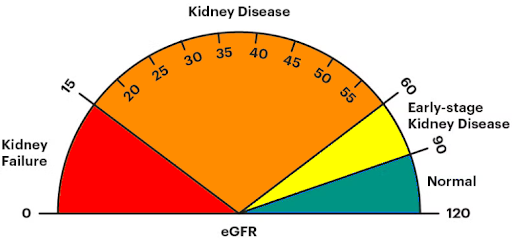
eGFR ranges and what they indicate about kidney function (Source: National Kidney Foundation)
How to Interpret Your eGFR
- 90 or higher: Normal kidney function
- 60–89: Early-stage kidney disease (often without symptoms)
- 30–59: Moderate kidney disease
- 15–29: Severe kidney disease
- Below 15: Kidney failure
What Your eGFR Actually Means
An abnormal eGFR doesn’t automatically mean something is seriously wrong—but it does signal how efficiently your kidneys are working.
Here’s how to think about it:
- A mildly reduced eGFR (60–89) can be an early warning sign, especially if you have risk factors like diabetes or high blood pressure
- A moderate or severe decrease typically reflects ongoing kidney damage that requires medical attention
- A single low result is less important than a consistent downward trend over time
Doctors don’t diagnose kidney disease based on one test alone. Instead, they look at patterns, repeat results, and other lab markers to understand what’s really happening.
Creatinine
Creatinine is a waste product produced by your muscles during normal daily activity. Healthy kidneys filter creatinine out of the blood and remove it through urine.
Because of this, creatinine levels in your blood can provide important clues about how well your kidneys are functioning.
What High Creatinine Levels May Indicate
When creatinine builds up in the blood, it may be a sign that your kidneys are not filtering efficiently.
However, it’s important to understand that creatinine is not a perfect standalone marker.
Levels can be influenced by several factors, including:
- Muscle mass (higher in people with more muscle)
- Age
- Hydration status
- Certain medications
This means a “high” creatinine level doesn’t always equal kidney disease—but it does require context.
How to Understand Your Creatinine Level
Creatinine is most useful when it’s looked at in context—not on its own.
Doctors use it alongside other tests, especially to calculate your eGFR, which gives a more complete picture of kidney function. They also look at how your levels change over time rather than focusing on a single result.
When reviewing your creatinine, the key questions are:
- Is it increasing over time?
- Does it match changes in your eGFR?
- Are there other abnormal lab results present?
A gradual rise in creatinine is often more meaningful—and more concerning—than a one-time elevated value.
Key Takeaway
Creatinine is a useful starting point—but it’s only one piece of the puzzle.
👉 On its own, it can be misleading.
👉 When combined with eGFR and other labs, it becomes much more meaningful.
BUN (Blood Urea Nitrogen)
BUN (Blood Urea Nitrogen) measures the amount of waste in your blood that comes from protein breakdown. Like creatinine, it’s another way to assess how well your kidneys are removing waste from the body.
However, BUN is less specific than other kidney markers and can be influenced by several non-kidney factors.
What BUN Levels May Indicate
Elevated BUN levels can suggest that your kidneys are not filtering waste effectively—but that’s not always the case.
BUN can also increase due to:
- Dehydration
- A high-protein diet
- Certain medications
Because of this, BUN is best understood as part of a larger picture, not a standalone indicator of kidney disease.
What Your BUN Result Actually Means
A high BUN level on its own doesn’t confirm kidney dysfunction. Instead, doctors compare it with other markers—especially creatinine and eGFR—to determine whether there’s a true concern.
For example:
- High BUN alone may simply reflect dehydration or diet
- High BUN + high creatinine may indicate reduced kidney function
Urine Albumin-to-Creatinine Ratio (ACR)
The urine albumin-to-creatinine ratio (ACR) measures how much protein—specifically albumin—is leaking into your urine.
Under normal conditions, healthy kidneys keep protein in the bloodstream. When albumin appears in the urine, it can be an early sign that the kidneys’ filtering system is becoming damaged.
Why ACR Matters
ACR is one of the earliest indicators of kidney disease, often detecting problems before changes show up in eGFR or creatinine levels.
Even small amounts of albumin in the urine can signal that something isn’t functioning properly.
Because of this, ACR is especially important for people with:
- Diabetes
- High blood pressure
- Other risk factors for kidney disease
What Your ACR Result Means
A higher-than-normal ACR suggests that your kidneys are leaking protein, which may indicate early kidney damage.
However, like other lab tests, results should be interpreted carefully:
- Temporary increases can happen due to exercise, illness, or dehydration
- Persistent elevation over time is more significant and may indicate chronic kidney disease
Doctors typically confirm abnormal results with repeat testing to determine whether the issue is ongoing.
Support Loved Ones as a Family
Kidney health is not just an individual effort—it’s a family effort.
Caregivers and family members can help by:
- Encouraging regular appointments
- Supporting healthy habits at home
- Helping track medications and test results
A strong support system can improve outcomes and quality of life.
Proteinuria and Hematuria
You may also see terms like proteinuria or hematuria in your lab results. While they can sound alarming, they’re simply descriptions of what’s found in your urine.
- Proteinuria means there is excess protein in the urine
- Hematuria means there is blood in the urine
What These Findings May Indicate
On their own, these findings don’t always mean there is serious kidney disease—but they do signal that something may need further evaluation.
They can be associated with:
- Inflammation in the kidneys
- Damage to the kidney’s filtering units
- Underlying conditions such as diabetes or high blood pressure
In some cases, especially with hematuria, the cause may not be kidney-related at all.
When to Pay Closer Attention
The key factor is persistence.
- A one-time finding may be temporary
- Repeated results over time are more likely to indicate an underlying issue
That’s why doctors often recommend follow-up testing to confirm whether these findings are ongoing.
Key Takeaway
Protein or blood in the urine isn’t always a diagnosis—but it is a signal worth paying attention to.
👉 Follow-up matters more than a single result
👉 Context and consistency are what determine next steps
What to Do If Your Kidney Lab Results Are Concerning
Seeing an abnormal result on your kidney labs can feel overwhelming—but the most important thing to remember is this:
👉 You don’t have to figure it out on your own.
The next steps are not about reacting to a single number—they’re about understanding what’s happening and taking the right actions early.
1. Work Closely With Your Doctor
Your primary care provider is your first resource for understanding your results.
They will:
- Review your lab trends over time
- Compare multiple markers (like eGFR, creatinine, and ACR)
- Determine whether further testing is needed
In many cases, repeat testing is the first step—because patterns matter more than one result.
2. Know When to See a Kidney Specialist
If your results show ongoing changes—such as a declining eGFR or persistent protein in your urine—it may be time to see a kidney specialist (nephrologist).
A specialist can:
- Identify the underlying cause of abnormal results
- Create a personalized care plan
- Help slow or prevent further kidney damage
👉 If you’ve been told your labs are concerning, this is the time to act.
At Renal Medicine Associates, our specialists focus on early detection, personalized treatment, and long-term kidney health—so you don’t have to navigate this alone.
3. Focus on What You Can Control
While not all kidney conditions can be reversed, many can be managed or slowed with the right approach.
Research shows that lifestyle changes and medical management can help protect kidney function and overall health.
Key areas to focus on include:
- Blood pressure control – One of the most important factors in protecting kidney function
- Blood sugar management (especially if you have diabetes)
- Maintaining a healthy weight and staying active
- Eating a balanced, kidney-friendly diet
- Staying hydrated
- Avoiding smoking and limiting alcohol
These changes don’t just support your kidneys—they improve your overall health.
4. Think Long-Term, Not Just One Result
Kidney health is a long-term process.
In some cases—especially when the cause is temporary—kidney function can improve. But for chronic kidney disease, the goal is often to slow progression and prevent complications, not reverse damage completely.
That’s why regular monitoring and early action are so important.
Key Takeaway
If your kidney lab results are concerning, the most important step is not to panic—it’s to take action early.
👉 Work with your doctor
👉 See a specialist when needed
👉 Make consistent, sustainable lifestyle changes
Because the earlier you respond, the more control you have over your kidney health.
This article has been reviewed for medical accuracy by the clinical staff at Renal Medicine Associates